


For British people of my generation, the question “What’s it like?” has generally had a comedic undertone. It’s the punchline of Monty Python’s now legendary “nudge-nudge” sketch, and, if you haven’t seen the sketch and want to call it up on the Internet, it remains, in context, I think extremely funny.
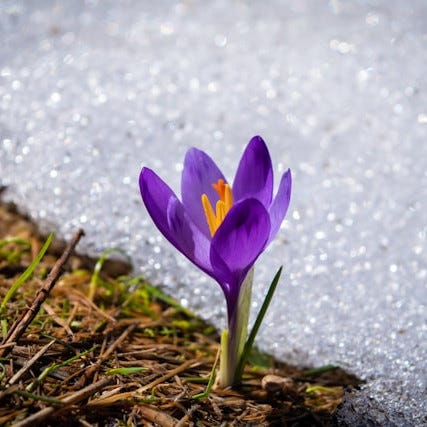
Photo by Luka Savcic on Unsplash
But lately, my non-American friends are starting to ask it of me in a very different tone. What’s it like to live in Trump’s America? What’s it like to live under the regime of a person who is not only mentally questionable and casually corrupt, but also openly, indeed gleefully, cruel? What’s it like to go from day to day feeling – in a pithy analogy that Mr. Los Angeles is given to quote – as if you’re tied to a chair and watching a toddler play with a loaded pistol?
So, for the average left-leaning liberal in sunny, let-it-all-hang-out Southern California, what is it like? Well, for those of us who have been so far lucky enough not to have had our entire lives torn apart, it’s in many ways not so very different from how it was eighteen months ago. We still wake up in the morning and go to work and come home and eat meals and pay bills and celebrate birthdays. But, yes, there are changes too, and some of them have crept in so gradually that, in the fine amphibian tradition of Kermit the Frog on the stovetop, we have more or less stopped noticing them.
We now, for instance, find it altogether unremarkable that the leader of our nation expresses himself in rambling bile-filled diatribes during the day and stays up for much of the night on his social media platform posting ever more outrageous fantasies about himself and ever more jaw-dropping lies about his opponents. When his staff insist, ever more loudly and in the face of ever more compelling evidence to the contrary, that no, no, really, he’s perfectly competent and doing what is best for the American people, we simply shrug. We accept without question that for most of this year we have been engaged in a war that no one asked for, no one can agree what is about, and no one seems entirely certain whether is still going on or not. In normal times, all of this would be the stuff of Alice in Wonderland as filtered through Franz Kafka. But for us by now, the abnormal has become so normal that we no longer have the capacity to be surprised by it.
There are other changes that affect us more practically. Our grocery bills have risen and our fuel costs have rocketed: we think hard before we take a car trip, and pour a stiff gin and tonic before we even consider pricing plane tickets. When we go to public spaces, we see fewer tourists than we used, and our overseas friends and family are flatly refusing to visit us. On our televisions, our funniest and most-loved talk show host has had his entire show canceled because he made jokes – jokes, for heaven’s sake – that offended the government. We find ourselves crying when we see footage of the Obamas, and sometimes ask each other, “Did you think there’d ever come a day when we’d miss Doubleya?” When we open our emails, we are flooded with messages from political and social campaigners begging us, each more urgently than the last, to sign this petition, fill out that survey, donate money here, read about this, listen to that.
And it is this last that signals the most consequential change of all. Because above and far beyond the surreal reportage of today’s news and the hypothetical threat of tomorrow’s, we are also facing real and immediate darkness; we must now live hourly with the knowledge that, as safe as we might individually happen to be – and I am fully aware that, as a reasonably solvent heterosexual Caucasian Californian, I am so far so infinitely much safer than are so many others – very bad things indeed are being done right now to other people all around us.
We know that men in masks are dragging our neighbors from the street and sentencing them to detention in sub-human conditions, and that there is nothing that we can, or the law is apparently prepared to, do to stop them. We know that, in many parts of our country, women are being denied essential treatments by doctors who know full well what they are doing but have been pressured by the authorities into doing it anyway. We know that the LGBTQ rights which so many of us had fought so hard for and been so proud to have won, are now under serious threat from a band of people who call themselves Christian without, apparently, having ever troubled to listen to the message of the man whose name they have co-opted. We know that this is not an America any of us had chosen to live in, or can feel anything approaching comfortable with living in. And yet here we are living in it.
The comparisons with Nazi Germany are inevitable, and I’m sure I am not alone in waking up most mornings remembering Pastor Martin Niemöller’s famous lines, “First they came for the Socialists and I did not speak out because I am not a Socialist….” What I had never before realized when reading those lines was just how echoingly empty it can feel to “speak out” to those in power when those in power simply do not care to listen. Because Mr. Los Angeles and I and so many other people have been speaking out, vociferously, in large ways and in small. We sign petitions. We march in protests. We send every penny that we can afford to the places where we feel it will do as much good as it can. I have joined a collective of immigrant activists called All-American Story –

– dedicated to collecting, recording, and publishing the true stories and other works of American immigrants from all over the globe as a gentle counter to the false narratives we are being fed by the xenophobes in power (check the stories out, here on the Substack blog of the same name, we have some good stuff). Meanwhile, Mr. Los Angeles’ Old Glory lapel pin, the one with the heroic family backstory that I am forbidden to reveal and that he has worn every day with pride and joy for so many years, is currently turned, pointedly, upside down. We could none of us look at ourselves or at each other if we didn’t do this. Has anything changed because we do it? Well, so far not a lot that is obvious, and it’s sometimes tempting to think that nothing has changed at all.
And yet, and yet. Along the way, there are starting to be shifts – small, sometimes barely visible, but shifts nevertheless – in the people as a whole. Yes, brawny young men with tattoos, and honey blonde and heartless “Christian” matrons will continue to espouse the views of these monsters. But others are changing. I don’t know many Trumpers personally, our circles just don’t cross. But a friend reports that her hairdresser, who commutes thirty miles each way from the Valley, has changed allegiance after the hike in gas prices. Another adds that her accountant has declared it was the killing by ICE of Renée Nicole Good in Minneapolis last January that was the last straw for him. (We could complain that it was the killing of one white person that affected him after so many unremarked on of Black and brown; but Renée was a person too, and at least he has been affected). At the top, there are rumblings of discord between Republican members of the Senate; there is evidence of serious concern about the upcoming midterms in November; and, in a rare piece of solidly good news, Florida’s infamous detention center “Alligator Alcatraz” is set to close down this summer. Maybe, just maybe, the ship is beginning to turn; maybe, just maybe, the voice of the people is beginning to be heard at last.
I once visited a friend in Chicago at the tail end of a long, brutal winter.
“It’s lovely to see you,” I said as we strolled down Diversey Parkway in a break between howling gales. “And you know I love Chicago. But, lord, doesn’t it look grim with no leaves on the trees and no color in the sky?”
My friend stopped dead beneath a tree and pointed triumphantly to the ground around it, where, if you bent very close and squinted very hard, you could make out tiny points of green struggling to surface from the ice-hard soil.
“Look,” she urged me. “Crocuses!”
As our nation approaches its 250th birthday, I pray for crocuses to bloom in America soon.
Such a beautiful articulation of many of my own thoughts and feelings. Thank you, Gabrielle. And for mentioning All-American Story as well.
I do miss your usual funny encounter with an annoying person though!
The best IC among many good essays.