


“You look stressed,” said my American friend Candy. “Do you want me to introduce you to my acupressurist?”
As she spoke, I felt each single hackle on my body arise, stand tall, and vibrate in fury.
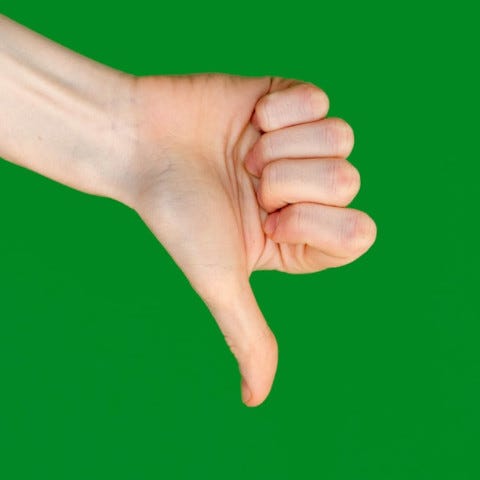
Photo by Anastasiya Badun on Unsplash
“Do not ever,” I directed her, “use that word in my presence. Ever.”
“Why not?” said Candy.
“Don’t ask her,” said my English friend Vanessa. “She’ll tell you.”
“Tell me what?” said Candy. “I’ve never had a problem with acupressure. Did something bad happen to you with it?”
“I told you,” I reminded her. “Not to use that word in my presence.”
“Don’t ask her why,” sad Vanessa. “Really. Just don’t.”
“Well, if something bad happened to you,” said Candy, “I’d want to know.”
“Oh, God,” said Vanessa. “She’s going to tell you.”
“That word,” I said.
“What word?’ said Candy. “Acupressure?”
“Oh, God,” said Vanessa.
“That word,” I said.
“Has anyone tried the new coffee shop on Lincoln?” said Vanessa. “The latte is good but they don’t have oat milk, which I’d think would cost them some custom these days.”
“That word,” I said, “is a flat-out insult to the Latin language.”
My Latin teacher at school had had the almost too perfect Latin teacher’s name of Miss Winthorpe. She was a small woman, with permed white hair and an icily condescending smile: her parents, unlike the immigrant forebears of most of the pupils at St. Angela’s Convent grammar school, North London, had been not only English but voluntary converts to Catholicism instead of former babies who had once been shoved indignantly into the baptismal font: she had received her degree from Oxford, went when she was sick, not to the National Health doctor, but to the private Catholic hospital near where Paul McCartney lived, and never, ever, ever split an infinitive. She thought, with some justification, that this made her posher than the rest of us. She also thought, erroneously, that it made her better, and rendered it several shades clearer than crystal that she had expected life to have led her somewhere markedly more uplifting than to spend her days reciting amo, amas, amat to a ragtag bunch of working class girls in Wood Green, London N22. Miss Winthorpe, in short, was a stuck-up old bitch.
But she did teach us Latin – maybe not as much as she might have if it had ever occurred to her to be kind to us, but she did teach us some. And one of the words she taught us was acus, or needle. It was reflected in both Latin and English, she said, not only as a sewing implement but as a mark of precision: it showed up in the English language in words like accurate and acuity, and for the ancient Romans, the equivalent of the blunt English carpenters’ expression, “you’ve hit the nail on the head,” had been the notably more elegant rem acu tetigisti – “you’ve touched the matter with a needle.”
Acupuncture, therefore – the ancient Chinese practice of pushing thin needles into specific parts of the body to stimulate energy points and thus relieve pain – makes perfect sense to me, both etymologically and medically. It is a practice that goes back for at least 4,000 years, and some say even longer; and, while I don’t pretend to understand the science that lies behind it, I have no question that it does work. I’ve undergone it myself and found its effects pleasing, if, on my own unromantically robust body, subtle; I have had friends whose systems are more finely tuned than my peasant own, who have experienced effects that have ranged from the dramatic to, in at least one case, the near-miraculous. As medical practices go, I have nothing but respect for it.
Nor do I have even the ghost of an argument against the idea of applying thumbs instead of needles to those same body parts in order to stimulate those same, or presumably very similar, energy points. Energy is energy, after all, no matter how it’s sourced, and I very much like a thumb: as digits go, it’s solid, hardworking and unpretentious; it’s useful in preventing my wine glass from slipping through my fingers; it even occasionally allows me to indulge my fantasy that it is I, not the cat, who have first dibs on the most comfortable armchair. So if some kind person wants to apply their own thumbs to making me feel better, then I say an enthusiastic yes, please. Dig those opposable digits into my pulse points; burrow them in between my toes; drive them deep into the back of my skull, and the harder you press, the happier I will be.
But when I examine the word that is currently used to describe this most agreeable practice, then my entire world view is thrown into chaos. Because, while the second part of the original “acupuncture” has been appropriately replaced with “pressure,” the “acu” part remains exactly the same, invoking needles where there are none, and altogether ignoring the honest thumbs that are actually doing the work. And if we begin to confuse thumbs with needles at this stage of our evolution, then we have to ask ourselves quite seriously where it will all end. Will we start to refer to a clumsy person as being “all needles?” Will we take to including emojis in our texts showing hypodermic syringes pointing up for approval or down for lack of? Will Mick ‘n’ Keef come together for a glorious last hurrah to re-record that shamefully steam-inducing paean to male arrogance Under My Hatpin? The ramifications could be catastrophic, and it will be squarely the fault of the person who had the depravity to launch upon an unsuspecting society the excrescence of a word known as acupressure. And when I consider that person, I wish for nothing more than a cloud of plague-bearing, bloodsucking, many-fanged harpies to descend on them and bear them away, shrieking, to burn in hell’s hottest oven for all eternity.
“I told you not to ask,” said Vanessa.
“Well, see,” said Candy, who is a sweet soul and likes to see the sunny side of life, “I think that’s very interesting that you know that, I just wish I knew Latin too. Did you learn it at school? I always think that would have been so cool.”
“Do you, now?” I said. “Well, let me tell you about my Latin teacher.”
“Oh, God,” said Vanessa.
👍👍👍 THUMBS UP!!
Although I did study Latin at school, it's always 'Xmas' that gets me going, or 'Tonite!', or 'while-U-wait'......