


It was a rainy morning in New York City and I had taken myself to breakfast at the sort of old-fashioned diner where the waiters still employ diner lingo.
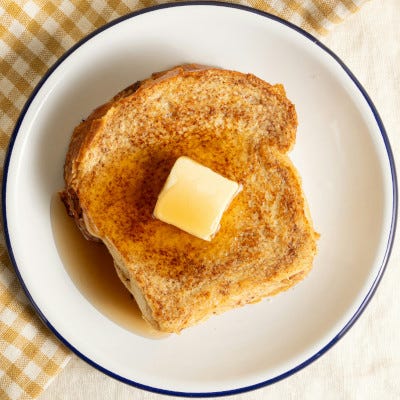
Photo by Marisela Leon on Unsplash
For those who do not know, diner lingo is a slang employed by wait staff in some of the more basic restaurants in the city, created originally for the waiters to entertain themselves while transmitting to each other order after order of mostly the same food. Eccentric and semi-humorous names have been given to regular dishes: some of them self-explanatory, such as “bad breath” for onion, or “wreck ‘em” for scrambled eggs; some of them faintly Biblical, such as “Adam and Eve on a raft” for two poached eggs on toast, or “Eve with a lid” for apple pie; an occasional few are mildly punning; and another will sometimes appear – “drown the kids” for boiled eggs, anyone? – that will be such as to make you wonder exactly what was going on in its creator’s brain.
It is a tradition that stretches back to the bustling days of the nineteenth century, when the city of New York was busy about inventing itself, and I, for one, find it thoroughly charming that, among the wave after wave of newcomers to the city earning their daily crust in the diners that still provide the backbone for its work force – dreamers of dreams arriving from Europe, from South America, from Asia, from Africa – all have embraced this odd offshoot of the English language as their own and allowed it to continue. It’s true that you can no longer find diner lingo in every single diner in New York; but it’s there if you want to hunt it out, and that morning, I was congratulating myself for having run it to ground.
“I would like a mushroom omelet,” I told the server: while a healthy breakfast dish, it is nevertheless a relatively newfangled creation and one for which there exists no slang equivalent. And, having suitably addressed my nutritional needs, I went on to treat myself to a juicy excuse to hear the lingo. “With rye toast, please.”
“Sure,” said the server, who was a thoroughly charming young man. He raised his voice to call across the room to his buddy at the griddle.
“Una omelet de champiñones y una tostada blanca!” he shouted.
Which latter part was not by measure of either menu item or slang idiom at all what I had had in mind.
“Not tostada blanca,” I corrected him politely. “Rye toast.”
He turned back to smile patiently at the ignorant gringa.
“Is what you said,” he reassured me kindly. “Tostada blanca. It means white toast.”
“I know it does,” I said. “But you see, I don’t want white toast. I want rye toast.”
The server’s smile became a trifle puzzled.
“White toast,” he agreed. “Tostada blanca. I just order it for you from my friend there.”
“But I want rye toast,” I said.
Subtly, the server’s expression shifted from the puzzled to the mildly concerned, and his eyes shifted just a little: a thinner-skinned woman might have wondered whether he were scanning the room for the whereabouts of my caring companion.
“Tostada blanca,” he repeated. And, yet again, because he was a young man who wanted nothing but the best for me, “That means white toast in Spanish.”
“But …” I began, and then stopped as the source of the disconnect became clear to me.
For all the years I have lived in America, for all the Thanksgivings and Fourth of Julys I have celebrated, for all the high school graduations I have attended, for all the peanut butter and jelly sandwiches I have consumed, for all the “have a nice days” I have bid my fellow Americans, I have never yet been able to master the sound of the American “r”. This is particularly frustrating as I actually have some success with it in other languages: French people have praised my authentically guttural Gallic version, and I can roll the Spanish edition with all the verve of a Rita (“I like to be in Amai-rica”) Moreno. But to this day, the American “r” eludes me. During my brief incarnation as an actor (it’s a long story), I was cast in the mercifully minuscule role of Lydia Lubey, downhome Midwestern American next-door neighbor, in a production of All My Sons, in which character I was required to deliver the line, “Frank, the toaster’s broken”: I do believe that I required as much coaching for that one line as the rest of the cast did for Miller’s entire tragic masterpiece, and even so, I heard someone comment at the first night party that, “the British girl did fine, all things considered.”
Experience has taught me that the only way I can have my American “r” accepted for what it is, is by the effective, if less than dignified, process of channeling my inner Tony the Tiger, the genial cartoon commercial face of Frosted Flakes breakfast cereal (“They’re GR-R-REAT!”). Without wishing to be too precious, I can’t honestly claim that pretending to be an oversized cartoon jungle cat in a TV commercial for sugar-crusted corn flakes would be my preferred method of presenting myself to the good people of Manhattan; but these were desperate times. Drawing on the acting skills I had acquired all those years ago, I cast my ego to the winds, thought orange and black stripes and a big cartoon grin, and summoned to my sense memory a large bowl of cereal flakes, glistening with sugar in the morning sunshine. I sat up straight in my chair, and opened my mouth.
“I want rrrrrrye toast!” I cried tigerishly.
“Oh.” The server’s face cleared as comprehension dawned on him. He nodded once, and turned back to his buddy. “No tostada blanca,” he shouted. And, launching to my delight without a pause into impeccable diner lingo, “Gimme whiskey down!”
My earlier studies of the Method had paid off. I sat back in my chair, sipped contentedly at the reliably revolting coffee that is the hallmark of any self-respecting New York diner, and squinted through the window at the throng of sodden New Yorkers scurrying through the rain to avoid the muddy puddles thrown up by the passing buses. It was going to be a good morning.
I have not noticed the "r" problem....not sure what that says about me!! Love this story
I love this collocation "reliably revolting coffee" - it's beautiful!
I'm a big diner fan, both the grubby and some of the more salubrious NYC diners. But the greasy spoons with their painfully mediocre coffee are where the action is at.
I'm trying to imagine how you'd say 'rye' - I thought it was usually the schwa /ə/ in the middle of the word (wat'ə) that might give people trouble.
The diner lingo is fascinating, I'm not familiar with it - something to listen carefully for next time I'm at a diner.