


When we were young and single, my friend Sylvia and I spent a summer consulting psychics. I suppose we were trying to find who our true loves would be, although I don’t remember anyone’s particularly predicting Mr. Los Angeles, and I do recall – since our budget didn’t run to anything like a psychic of any repute – a surprising number of curses hanging over us that, mysteriously, could only be removed by the purchase of the same eye-wateringly expensive sage candle. But we carried on anyway – I can only think we must have been either bored or spectacularly dumb, but it was what we did that summer.
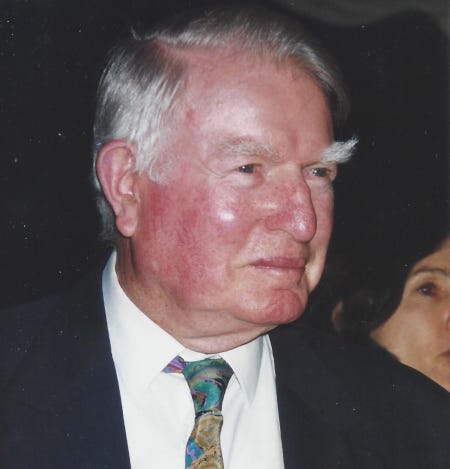
Photo by Tom and Julie Trainor
One evening we drove to the Valley to consult a man we had heard of called Eric. Eric was slightly built and balding with a mild manner and a clipped New Zealand accent: he led us into the crystal-bedizened living room of his modest ranch-style house, and disappeared further into its interior, he said, “to prepare.” A few minutes later he returned, sporting an immense medallion and a booming baritone voice, announcing himself to be Babob from the lost kingdom of Atlantis, given instructions by the High King to escort us to the bar at the corner of his street where we were to join him in downing unspecified quantities of “the potion you call te-quila.”
Eric was harmless, if unhinged: we fled, giggling, to the car, and drove, still laughing, back to the Westside, with an anecdote for the more easily amused of our acquaintance for a week, and a standing joke for ourselves in perpetuity. I had also acquired something that would prove to be of infinitely greater value, which was a telephone number.
In among the crystals on Eric-soon-to-be-Babob’s coffee table was a book called How To Be Irish in Southern California. I had never seen it before nor have I found a trace of it since: it was a slim volume, since the Southern Californian Irish population is not massively large, and contained lists of local Irish fleadhanna and festivals, shops where you could buy Claddagh rings and Wolfe Tones CDs, and more of the same. One item that had particularly caught my attention was a list of the all of two Irish language instructors in Los Angeles, one of whom, a man called Patrick Burke, apparently lived close to me in Santa Monica.
The next day I telephoned the number given in the book, to be greeted by a mellifluous voice with a majestic Celtic intonation.
“I understand you give Gaelic lessons,” I said.
“’Tis not Gaelic,” the voice on the telephone corrected me sternly. “’Tis the Irish language.”
“Oh,” I said. “Isn’t that called Gaelic?”
“In the Irish language,” the voice allowed, “’tis an Gaeilge. But in English, ‘tis the Irish language.”
I never did learn how Patrick came to be included in the book on Eric’s coffee table because he seemed somewhat surprised to be asked for lessons, especially since, as he noted disapprovingly, “they’ve changed the spelling” (the Irish alphabet had been updated from the old-fashioned cló Gaelach to Roman type some thirty years before). But he cautiously agreed to give it a try. And so a light entered my life that still shines on it, if only in memory, to this day.
Patrick was a widower who lived in an airy apartment filled with books and paintings on San Vicente Blvd: he was a tall, stately man with a shock of silver hair, eyes like sapphires, and long, elegantly ringed hands which he would lay gracefully one over the other across his substantial stomach as he sprinkled our lessons with fairy dust plucked from his seemingly bottomless supply of songs, poems and stories. He was born shortly before the Easter Rising, and grew up in the remote town of Gort, in Galway, where entertainment, he told me, was simple, and in the winter, the scéaltóir, or storyteller, would travel the area, accepting lodgings for the night in exchange for an evening of stories. Patrick was something of a scéaltóir himself: he would weave spellbinding tales of his time in Ireland and in Indi-ah, where he had dined with princes and once been attacked by a pan-thah, and once, when sitting with Mr. Los Angeles and me over a pre-dinner drink in the bar of the English pub, embarked on a tale of his India days so engrossing that the couple sitting next to us, who had openly abandoned their own conversation in favor of ours, were aghast when our table was called. “But you can’t go!” they cried. “We want to know what happened!”
Patrick was a teacher by trade: he had spent some years as a schoolmaster at St. Monica’s High School, and now was mostly retired, occasionally teaching a poetry class for senior adults at Santa Monica College. His poetry declamations were famous: he had once spotted a display of daffodils at the Santa Monica Farmers Market, and stopped to recite Wordsworth’s poem, by the end of which a crowd had gathered, and the stall holders presented him with a bunch of the same flowers as an accolade.
For years I would go to Patrick’s apartment on Friday mornings for my lesson. Aside from a smattering of Old Norse at college, Irish was the first language I had studied that was not Latin-based, and for me, it required a radical re-think of what was a noun, what a verb, and what an adjective. I did not, for instance, stand or sit, I was in my standingness or my sittingness; I was not hungry or sad, there was hunger or sorrow on me; I did not know a thing, there was – or more often, was not – knowledge at me. And these prepositions mattered. When I would leave Patrick’s apartment he would bid me farewell with slán leat – health be with you – to which the correct return would be slán agat – health be at you – which time and again I would forget and parrot slán leat back at him, until he at last burst out in exasperation, “Do you not get it? You’re going away so I say health go with you, but I’m staying here, so you say health stay at me.” Irish is a tough, tough language to learn. But when it comes together – as at last it did, just a little, even for me – the song it sings is hypnotic.
Patrick was never an effusive man – a wry side comment was more his style of communication – but very occasionally he would let slip that he kinda sorta liked me. Once, when I was inscribing a book to him, he asked me to make it out do mo chara Pádraig – to my friend Patrick – and then shook his head and amended, “No, do mo chara dílis Pádraig” – to my dear friend Patrick. My heart turned somersaults of joy.
He came to our wedding, where he broke out some impressively nifty moves on the dance floor: during the reception, he chatted with Sylvia, who later revealed to me that when he had taught her at St. Monica’s, she had known him, not as Mr. Burke, but as Brother Thomas. “Sylvia says she remembers you from St. Monica’s,” I told him the next time I saw him. “Ah, so,” he replied benignly, and that was it. It appeared that this was one story with which the scéaltóir did not intend to regale us.
I was not able to say good-bye to Patrick. I telephoned him one day to arrange our regular Good Friday outing to Stations of the Cross at St. Monica’s church, where we would both lament the substitution of contemporary music for the mournful traditional Stabat Mater – “Björk!” he once snorted disgustedly, although whether his indignation had been aroused by Björk’s singing style or by her lack of Catholic credentials remained unclear – but he never called back; we did not have close friends in common, but I made some more calls and at last learned that a few weeks before he had suffered a stroke and died. He was well into his eighties and had lived a full life, but I was sad not to have seen him one more time, and even sadder to have missed his funeral: it would have been a good one.
My Irish is now so rusty it all but shrieks when it hears me coming. I do try to keep it up on Duolingo, although Duolingo requires me to repeat that the boy drinks the milk over and over until I am tempted to pour the bainne down the pesky little buachaill’s throat until it chokes him; and it never, ever folds one hand over the other to serenade me with a snatch of Seán Ó’Duibhir a Ghleanna. But I keep going, in memory of Patrick, and also of those of my family who spoke the language daily until they were forced to stop: it seems the least I can do to honor him and them.
A Phádraig, a chara dílis, I’ll raise a glass to you on St. Patrick’s Day. I’ll also raise a glass to Babob from Atlantis via Auckland, New Zealand, to thank him for the extraordinary gift he gave me without even knowing it, and to hope that, wherever he is and whatever earthly form he is currently taking, he has found someone he cares for to drink the potion they call te-quila with him.
What a great story about your Irish language journey with Patrick. Certainly befitting for tomorrow's St. Patrick's Day, "Lá Fhéile Pádraig sona duit."
Thanks Gabrielle so much for this. I remain a huge Patrick fan and still find myself thinking of him fairly often and fondly. He was a remarkably relevant, charming, funny and thoughtful man and I thank you for introducing him to me. In all my years, the way he pronounced my name will always be my favorite and I can still hear it, very clearly, to this day...